THE MAKING PROCESS / 01
Tobacco Cultivation
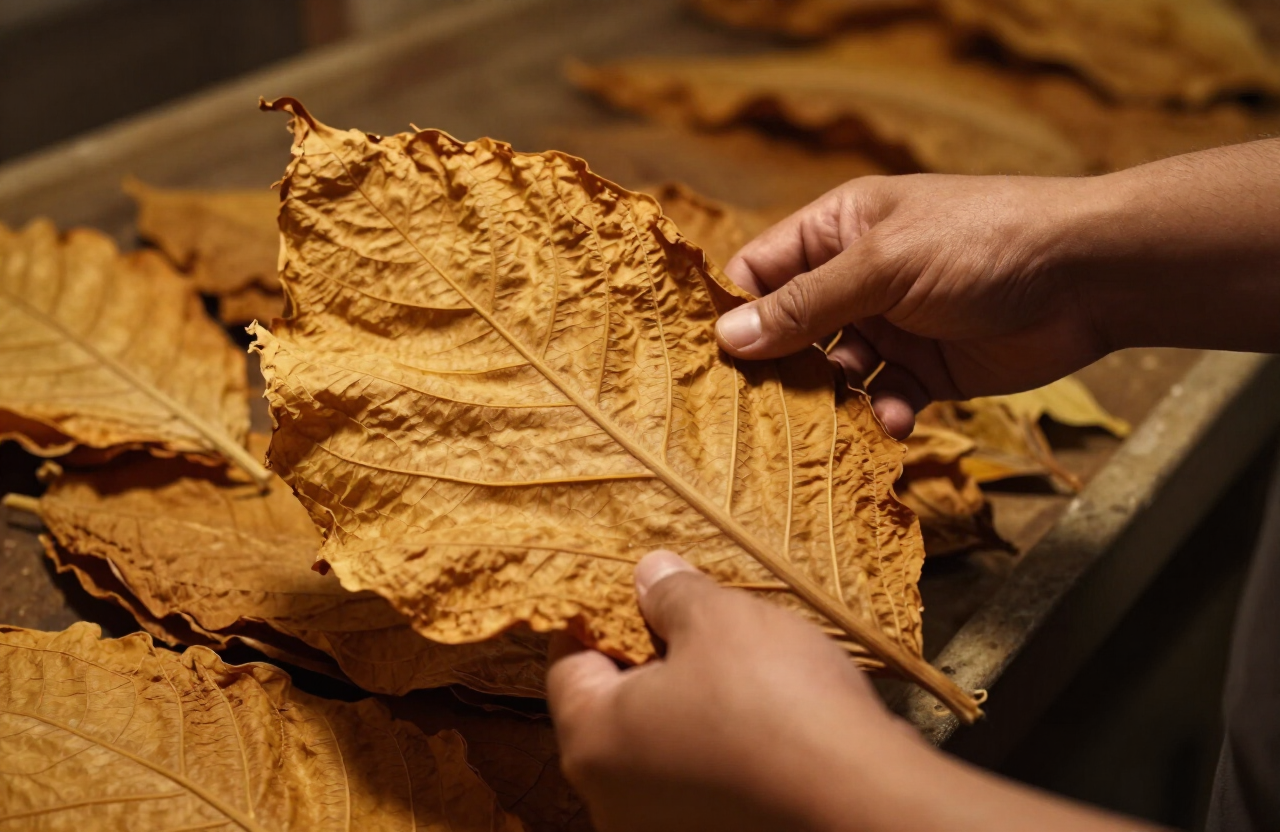
Tobacco quality begins in the field. Climate, soil composition, seed selection, farming knowledge, and careful plant management all shape the character of the leaf long before it ever becomes a cigar.
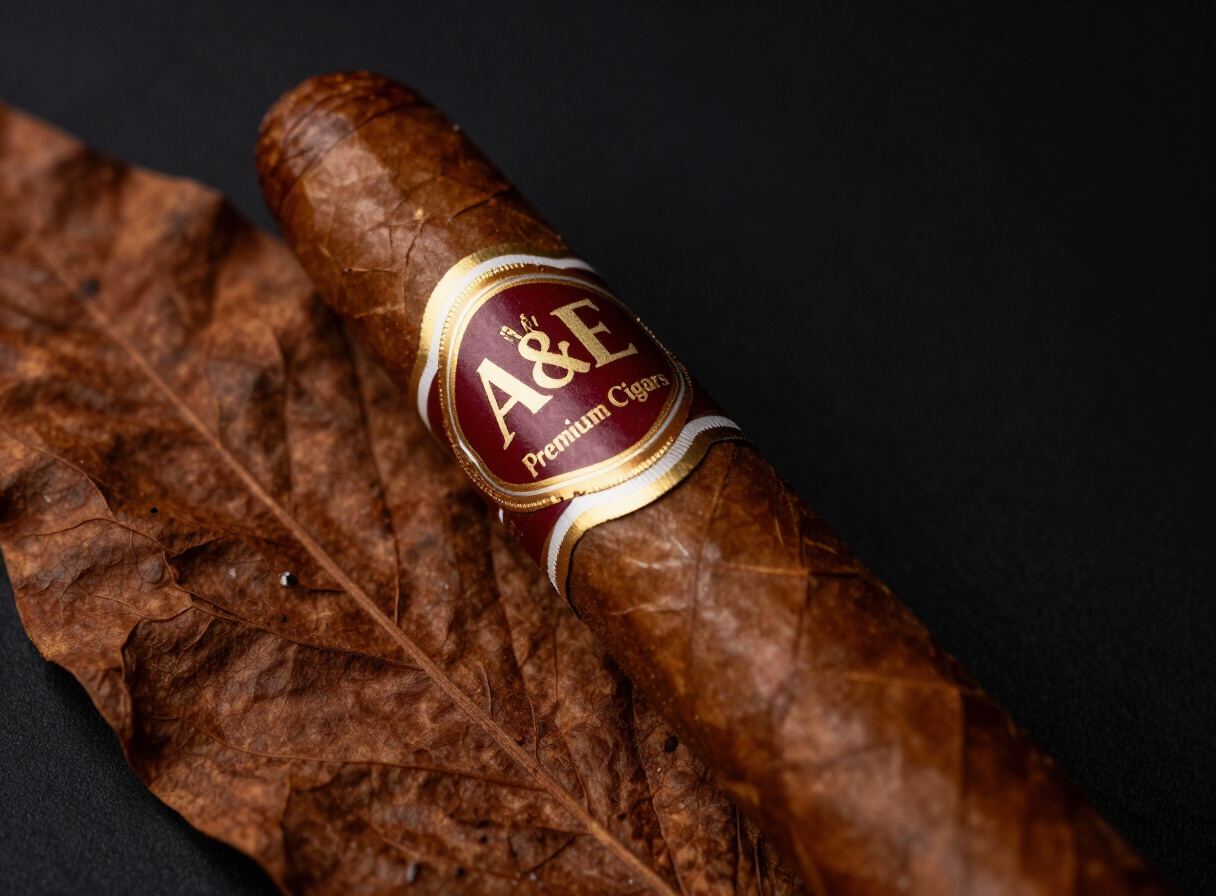
The making of a premium cigar is a patient discipline. Discover how carefully cultivated tobacco becomes a refined cigar worthy of the A&E name.
Every stage contributes to the character of the finished cigar. Explore the journey from growing the tobacco leaf to the final resting process.

Tobacco quality begins in the field. Climate, soil composition, seed selection, farming knowledge, and careful plant management all shape the character of the leaf long before it ever becomes a cigar.

Leaves are harvested with care and moved to curing barns, where moisture is gradually reduced. Over time the leaves develop their natural color, texture, and early character.

Tobacco is carefully stacked and closely monitored so natural heat can reduce harsh qualities while developing aroma, balance, and complexity.

Selected tobacco may be aged for extended periods, allowing flavors to become smoother, rounder, and more integrated over time.

The interplay of wrapper, binder, and filler defines a cigar. Master blenders combine leaves to control strength, aroma, combustion, balance, and flavor development.

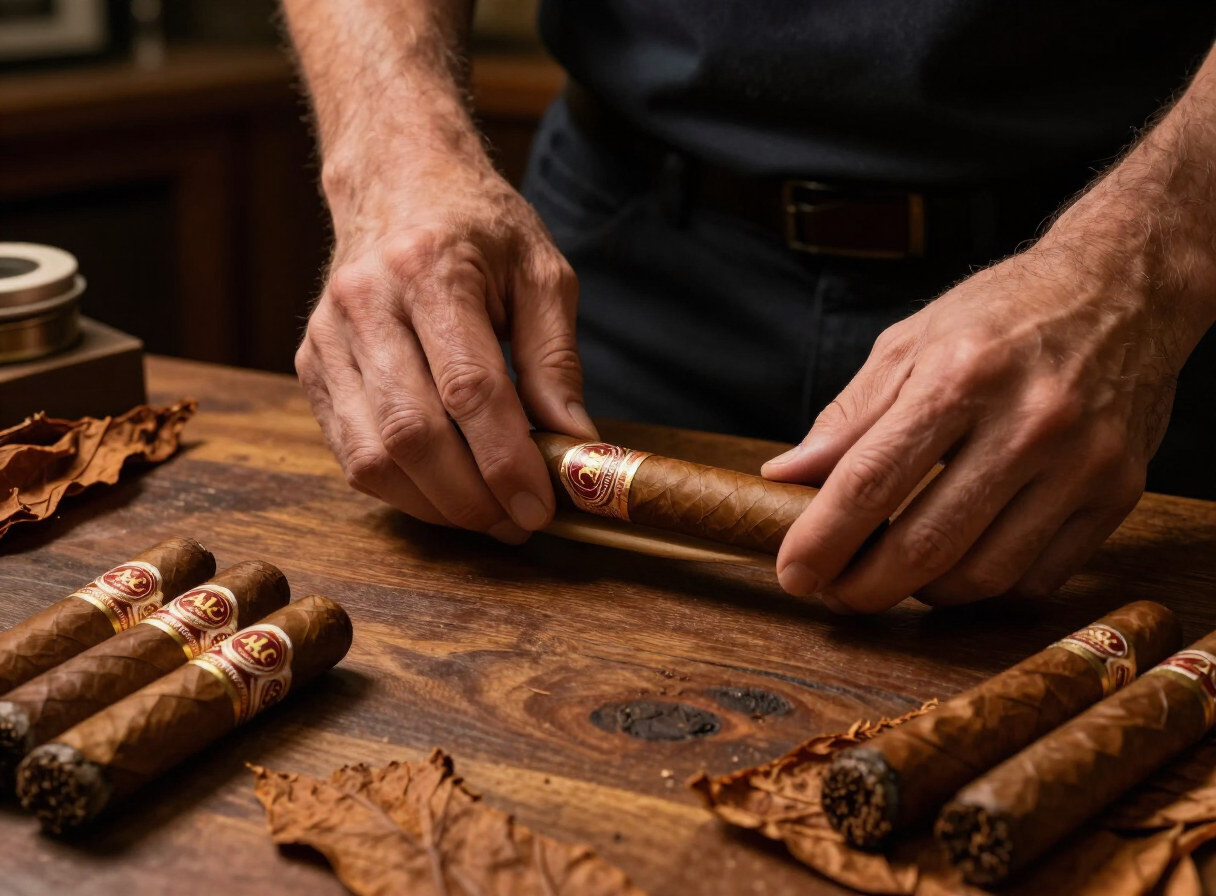
Skilled rollers shape the filler, apply the binder, and finish each cigar with a carefully selected wrapper leaf, blending precision with artistry.

Premium cigars are inspected for appearance, construction, consistency, draw, weight, and overall finish before they are approved.

Completed cigars rest in controlled humidity and temperature conditions, allowing them to settle before packaging and distribution.
“Craftsmanship is found in the details that cannot be rushed.”
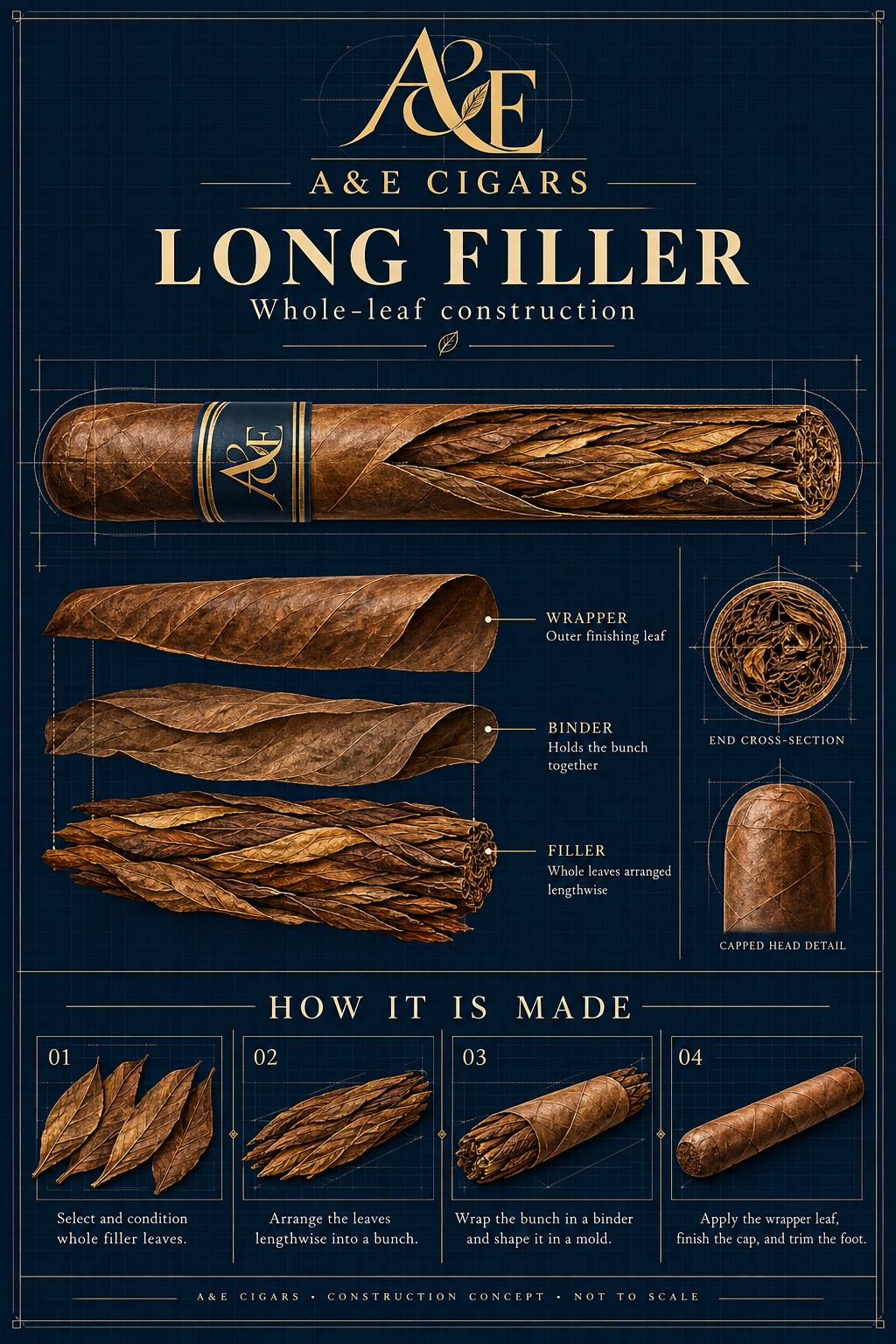
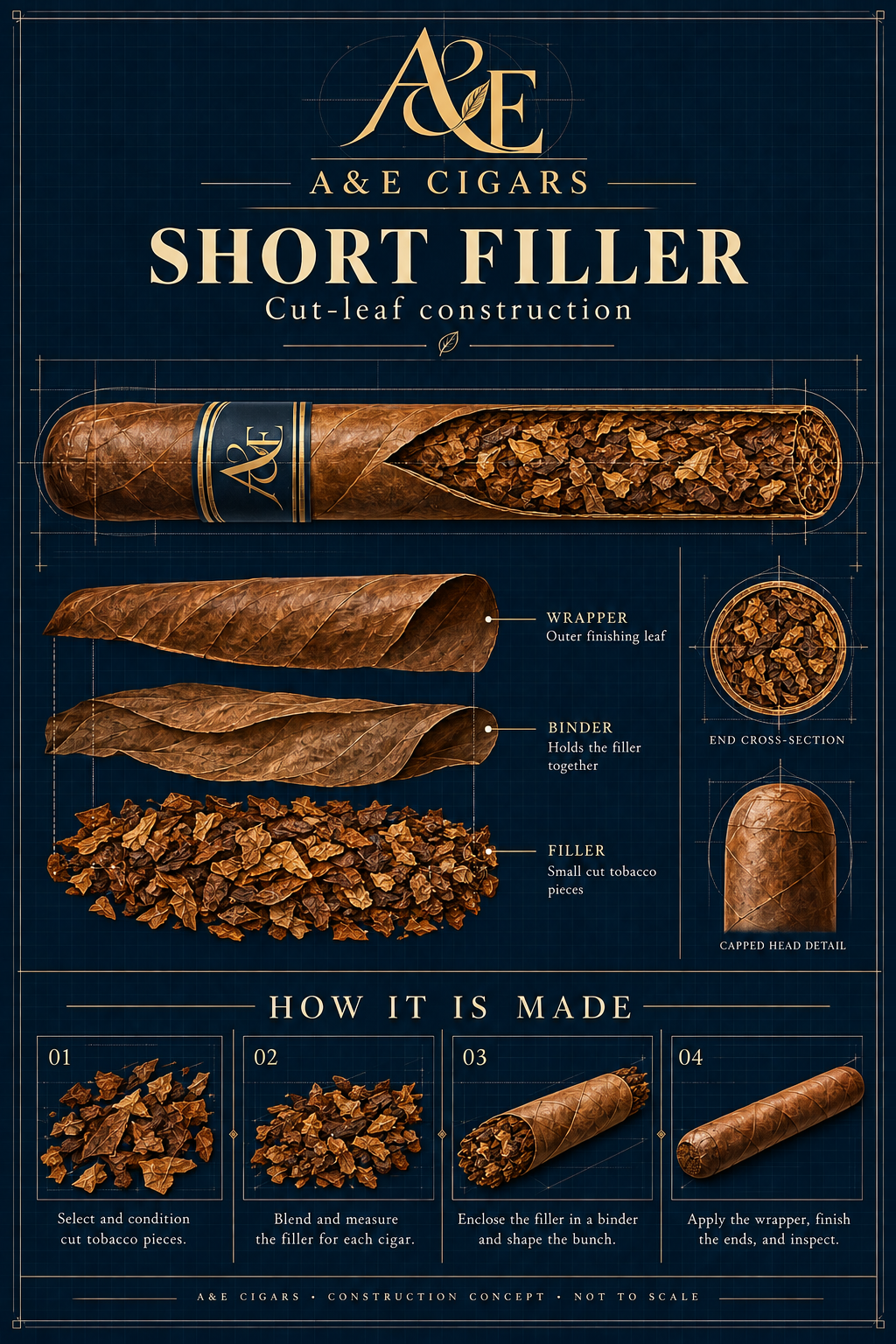
Both long-filler and short-filler styles share the same three essential layers. Their distinction begins with the filler inside.
The outer finishing leaf. It defines appearance and contributes much of the aroma.
A resilient leaf that holds the filler together and helps shape the draw and burn.
The interior tobacco. Whole leaves in a long filler; small cut pieces in a short filler.
A long-filler cigar is built from intact tobacco leaves laid the full length of the cigar. The roller selects, arranges, and bunches those leaves by hand so the draw stays open and the burn stays even from head to foot.
Whole filler leaves are chosen for color, texture, and elasticity, then conditioned so they fold without cracking.
Leaves are laid lengthwise, overlapping so the bunch fills the ring gauge evenly from cap to foot.
The bunch is wrapped in a binder leaf and pressed in a mold until it holds a straight, consistent shape.
The wrapper leaf is spiraled on, the cap is finished at the head, and the foot is trimmed clean.
A short-filler cigar uses small cut pieces of tobacco instead of whole leaves. The filler is blended and measured, then enclosed so the pieces stay packed evenly inside the binder and wrapper.
Cut tobacco pieces are sorted and conditioned so the blend is even in moisture, size, and character.
The filler is blended, then portioned so each cigar receives the same weight and mix of leaf.
The measured filler is enclosed in a binder and shaped into a firm, uniform bunch.
The wrapper is applied, both ends are finished, and the cigar is inspected for draw, weight, and appearance.
The wrapper leaf shapes much of a cigar’s character. These commonly associated appearances and flavor notes provide an introduction to five styles.
Light golden-brown with a smooth appearance, generally associated with mild, creamy, and gently sweet characteristics.
Reddish-brown and refined, commonly linked with spice, warmth, and a lively, aromatic character.
Rich reddish tones, often associated with pepper, cedar, and a bold, expressive profile.
Dark and oily from extended fermentation, commonly associated with cocoa, coffee, and sweeter, deeper notes.
The darkest wrapper, nearly black, often linked with intense, robust, earthy characteristics.
Strength and flavor are not the same. A cigar can offer complex, layered flavor while remaining mild or medium in strength. Strength refers to intensity and body; flavor refers to the aromas and notes you experience.
Factors commonly considered include available time, preferred strength, flavor preferences, experience level, occasion, and cigar size.
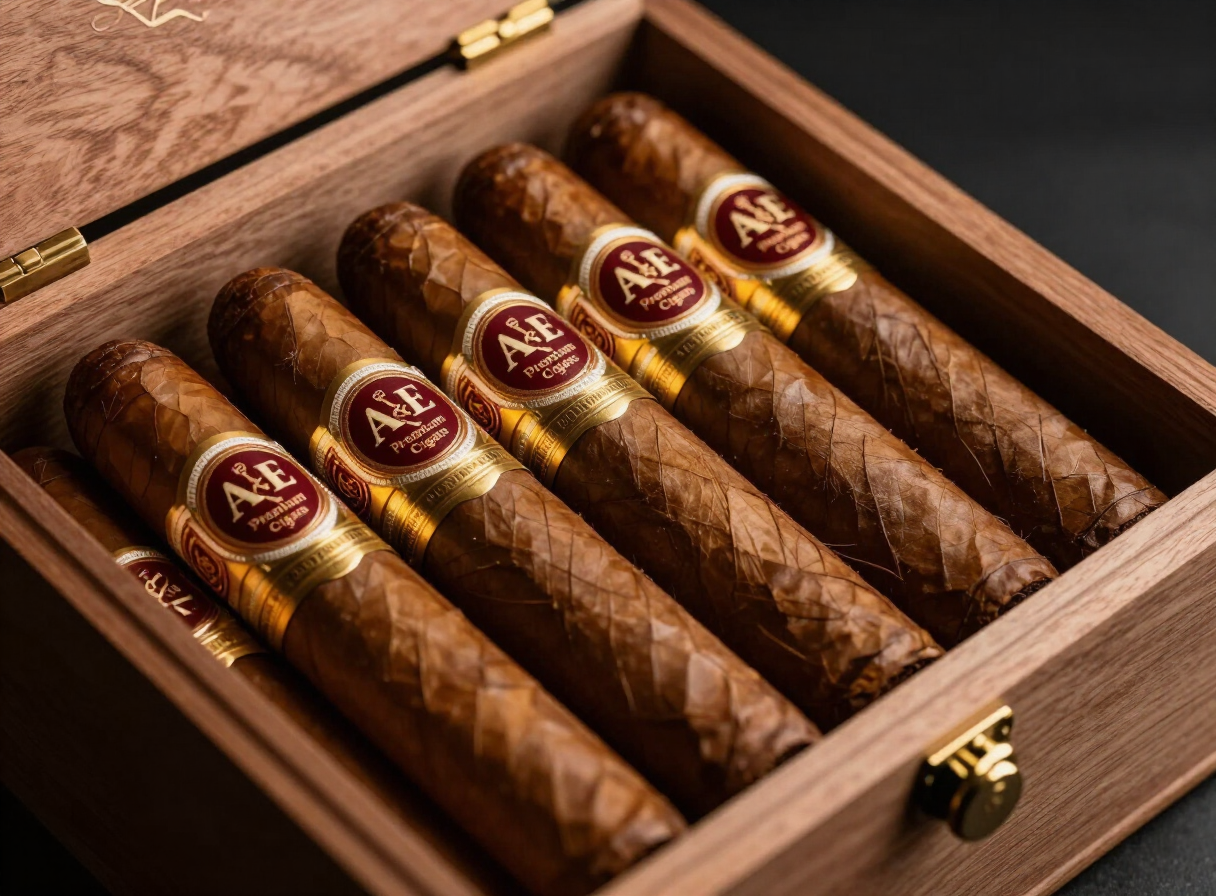
Premium cigars are best kept at stable humidity and temperature. Consistent conditions help preserve construction and character over time. Always follow the instructions provided with your humidor or storage equipment.
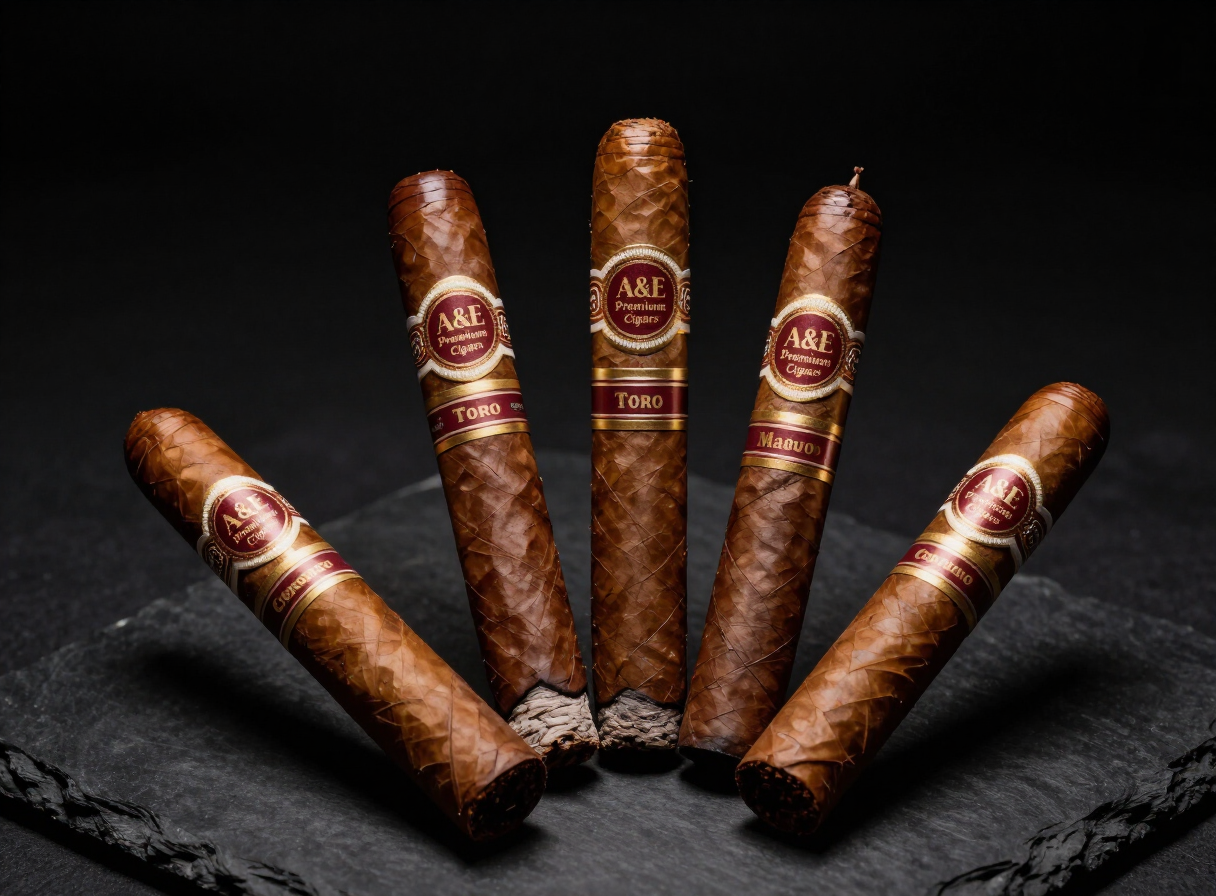
Explore the featured concepts behind A&E Premium Cigars.